Why your “mental” block is actually a metabolic crisis—and how to refuel.
Activating the Overwhelm Protocol is the first step toward regaining control when your high-performance brain begins to redline. We have all been there. Your brain feels like it’s running 50 tabs at once, and the “System Busy” cursor is spinning in your mind. You can’t focus, your temper is short, and your decision-making feels sluggish and reactive.
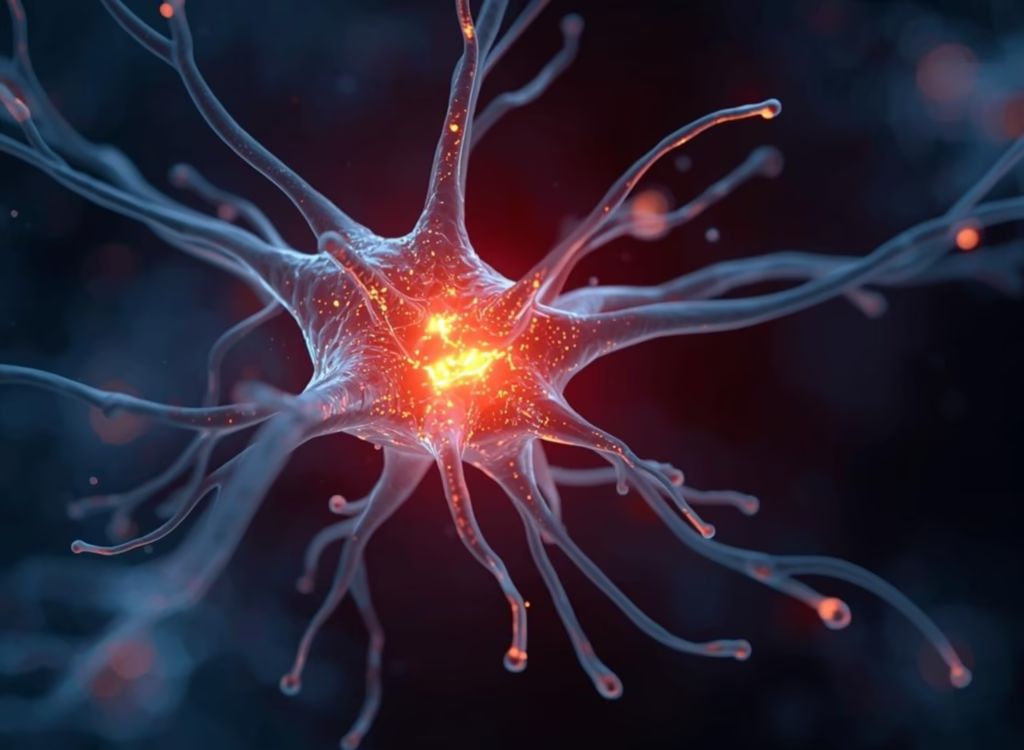
For the high-processor, this state of being overwhelmed isn’t just a “bad day.” It is a physiological metabolic brownout. Your brain, which represents only 2% of your body weight but consumes 20% of its energy, has simply run out of the high-octane fuel required to maintain 4K resolution. When the Overwhelm Protocol is triggered, your prefrontal cortex begins to starve, shifting control to the primitive, reactive centers of the brain. If you try to “hustle” through this, you aren’t being disciplined; you are trying to drive a car on an empty tank. You need a chemical and biological reset to restore your leadership capacity.
The Science: The Glucose and Cortisol Spike
When you are under high stress, your body floods your system with cortisol. While this helps you “fight or flee,” it inhibits your brain’s ability to process complex data. For the sensitive leader, this chemical flood is more intense. To regain control, the Overwhelm Protocol focuses on stabilizing your blood sugar and clearing the neuro-chemical fog through strategic nutritional and sensory interventions.
The 6 Tools of the Overwhelm Protocol
Tool 1: The Glucose Stabilizer. When overwhelm hits, don’t reach for caffeine or sugar. That creates a “spike and crash” cycle that worsens the fog. Instead, consume a small amount of complex carbohydrates paired with a healthy fat (like walnuts or an avocado). This provides a steady stream of “brain fuel” to the prefrontal cortex, allowing the Overwhelm Protocol to move from panic to logic.
Tool 2: Magnesium for the “Nervous Reset.” High stress depletes magnesium, a mineral responsible for over 300 biochemical reactions, including the regulation of the stress response. A high-quality magnesium glycinate supplement or magnesium-rich snack (dark chocolate or pumpkin seeds) can help “down-regulate” the nervous system, signaling to the brain that the “threat” is over.
Tool 3: Hydration and Electrolyte Loading. The brain is 75% water. Even a 2% drop in hydration can cause a massive lag in cognitive processing. If you are overwhelmed, you are likely dehydrated. Use the Overwhelm Protocol to stop and drink 16oz of water with a pinch of sea salt or an electrolyte powder. This restores the electrical conductivity of your neurons.
Tool 4: Amino Acid Support (L-Theanine). Found naturally in green tea, L-Theanine is a “nootropic” that promotes relaxation without drowsiness. It increases alpha brain waves—the state of “calm alertness.” Taking 200mg of L-Theanine can help clear the “mental static” of the Overwhelm Protocol and restore your 4K focus.
Tool 5: The “Darkness Reset.” Your brain is highly sensitive to light-driven cortisol production. If you are redlining, spend 5 minutes in a pitch-black room or use a sleep mask. This “sensory deprivation” allows your neurotransmitters to recalibrate without the constant bombardment of visual data, effectively clearing the cache of your processor.
Tool 6: The “One-Thing” Metabolic Filter. Ask yourself: “What is the one task that, if completed, would lower my cortisol the most?” Don’t look for the biggest task; look for the most “stress-inducing” one. Completing it triggers a dopamine hit that counteracts the overwhelm, giving you the metabolic momentum to finish the day.
Overwhelm is a biological signal that your “fuel tank” is empty.
Stop trying to lead with a starving brain. Run the Overwhelm Protocol, restore your chemical balance, and come back when your system is optimized for high-performance output.
At NEST, we treat your leadership as a biological event. We teach you how to fuel the machine so the machine can fuel the mission.
REFERENCES
Gomez-Pinilla, F. (2008). Brain foods: the effects of nutrients on brain function. Nature Reviews Neuroscience.
Huberman, A. (2022). Using Light and Nutrition to Optimize Brain Health. Stanford Medicine.
Aron, E. N. (1996). The Highly Sensitive Person: How to Thrive When the World Overwhelms You.
Amen, D. G. (2020). The End of Mental Illness: How Neuroscience Is Transforming Psychiatry.