Introduction:
In today’s fast-paced world, overstimulation is more common than we think. Whether it’s the constant ping of notifications, crowded spaces, loud noises, or intense emotions, our nervous systems are often running at full throttle. Overstimulation doesn’t just feel uncomfortable—it can impact focus, mood, and overall wellbeing.
If you’ve ever walked into a busy café hoping for a peaceful coffee break, only to leave feeling drained, foggy, or anxious, you know exactly what we mean. The good news? Recovery doesn’t have to take hours. With intentional strategies, you can reset, recharge, and protect your energy today.
These hacks aren’t just for Highly Sensitive People (HSPs)—they’re for anyone who feels the weight of too much input.
Why Overstimulation Happens
Overstimulation occurs when your brain and body receive more input than they can comfortably process. While HSPs naturally experience heightened sensitivity, anyone can feel overwhelmed under the right conditions. Common triggers include:
- Crowded or noisy environments: Malls, public transport, offices, or restaurants
- Sensory overload: Bright lights, strong smells, or constant notifications
- Emotional intensity: Arguments, someone venting, or high-stress situations
- Overloaded schedules: Multitasking, back-to-back meetings, or constant decision-making
- Social pressure: Feeling like you need to “perform” or meet everyone’s expectations
Overstimulation can manifest physically and emotionally: racing thoughts, tight chest, irritability, fatigue, or even headaches. Recognizing it is the first step toward recovery.
7 Hacks to Recover from Overstimulation
HSP Life Hack #1: Retreat to Your Personal Calm Zone
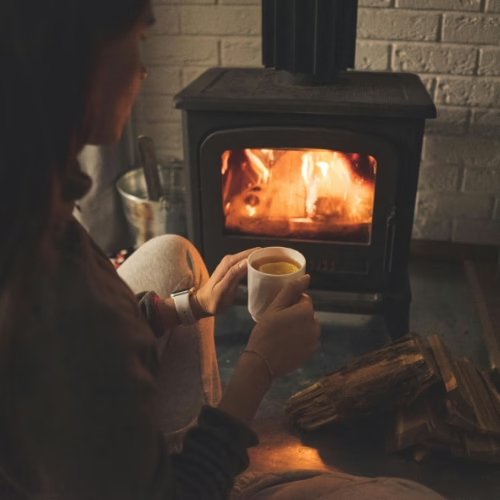
Think of the last time you felt overwhelmed. Maybe it was after a long day at work or a social event you couldn’t leave early. One of the fastest ways to recover is to create a safe space.
It doesn’t have to be big:
- A quiet corner in your home
- Your bedroom with soft lighting and a cozy blanket
- A small space outdoors in nature
Tip: Keep this space free of phones or notifications. Your nervous system needs uninterrupted rest.
HSP Life Hack #2: Slow, Intentional Breathing
Overstimulation often triggers the “fight or flight” response. Deep, mindful breathing signals your body that it’s safe to relax.
What to do:
- Sit comfortably and inhale for 4 counts
- Hold for 4 counts
- Exhale for 6 counts
Repeat this 5–10 times. You’ll notice your mind slowing down and your body relaxing.
HSP Life Hack #3: Step into Nature
Even a few minutes outside can reset your nervous system:
- Walk barefoot on grass or sand
- Sit under a tree and listen to the wind
- Watch birds or flowing water
Nature gives your senses gentle input instead of overwhelming input. Even 10 minutes can restore focus and calm.
HSP Life Hack #4: Reduce Sensory Input
When recovering, reduce what your senses take in:
- Dim harsh lights or switch to soft lamps
- Turn off notifications or social media
- Avoid multitasking or large crowds for a while
- Listen to calming music or silence
These adjustments are not indulgent — they are essential for your energy and wellbeing.
HSP Life Hack #5: Gentle Movement
Stress is stored physically. Gentle movement helps release tension and restore balance:
- Stretch your arms, shoulders, and neck
- Do slow yoga or tai chi
- Walk slowly, noticing each step
Avoid intense exercise if you’re already drained — the goal is recovery, not burning more energy.
HSP Life Hack #6: Check Your Emotions
Overstimulation isn’t always about the environment — it’s also emotional. Ask yourself:
- What am I feeling right now?
- Which feelings are actually mine, and which belong to others?
- Do I need to express or release this feeling?
Journaling, talking to a trusted friend, or even whispering your thoughts out loud can help prevent emotional overload.
HSP Life Hack #7: Recharge with Rest and Routine
Finally, prevention is key:
- Prioritize regular, high-quality sleep
- Schedule quiet breaks in your day
- Protect alone time even if others don’t understand
- Learn to say “no” without guilt
Consistency in self-care reduces overstimulation before it becomes overwhelming.
A Real-Life Example
Sarah works as a project manager in a busy office. One Thursday, she had back-to-back meetings, her inbox overflowed with urgent requests, and a coworker came to her venting about a personal problem during lunch. By 4 PM, her head was spinning, her chest felt tight, and even small tasks seemed impossible. She was exhausted, frustrated, and overwhelmed.
Here’s how Sarah applied the recovery hacks:
- Retreated to a calm zone – She stepped into an empty conference room, closed her eyes, and gave herself permission to pause.
- Practiced deep breathing – For 5 minutes, she focused on slow inhales and longer exhales, letting her racing thoughts settle.
- Stepped into nature – She went outside to walk in the sunlight, noticing the wind on her skin and the sounds of birds.
- Checked her emotions – Sarah wrote down which feelings were hers and which belonged to her coworkers, helping her release emotional overload.
- Protected her energy afterward – She planned a short break and turned off notifications for the rest of the afternoon to prevent further overstimulation.
Result: Within 30 minutes, Sarah felt calmer, clearer, and able to return to her tasks without feeling drained. She realized that even small, intentional steps can restore focus and balance during an overwhelming day.
💡 Tip: Even small, intentional steps make a significant difference in recovery.
Final Thoughts
Overstimulation isn’t a weakness—it’s your nervous system signaling that it needs care. Whether you identify as an HSP or not, these 7 hacks are practical strategies to restore balance, protect your energy, and stay functional in a fast-moving world.
You don’t have to endure overwhelm or push through until exhaustion. With awareness and intentional recovery practices, you can thrive, stay connected, and honor your wellbeing.
If overstimulation affects your focus, mood, or relationships regularly, a professional coach can help:
- Identify personal triggers
- Develop a recovery routine that works for your lifestyle
- Set boundaries without guilt
- Protect your nervous system while staying empathetic
✨ Book a one-on-one session with a coach to learn how to reset faster, stay balanced, and thrive even in a busy, overstimulating world.
If this guide helped you, share it, save it, or leave a comment with your favorite recovery hack—so others can reclaim calm too. 💛
Talk To A Coach
— Support should be accessible. We offer a complimentary call with a certified coach to help you find direction and take action.
Schedule a Complimentary CallDisclaimer: NEST Life Coaching offers life coaching and personal development services. We are not licensed mental health professionals and do not provide clinical therapy, diagnoses, or medical advice. Our services are not a substitute for professional mental health care.
📚References
American Psychological Association (APA). (2022). Stress: How to Manage It. Retrieved from https://www.apa.org
Cloud, H., & Townsend, J. (1992). Boundaries: When to Say Yes, How to Say No to Take Control of Your Life. Zondervan.
Neff, K. (2011). Self-Compassion: The Proven Power of Being Kind to Yourself. HarperCollins.
Brown, B. (2012). Daring Greatly: How the Courage to Be Vulnerable Transforms the Way We Live, Love, Parent, and Lead. Gotham Books.